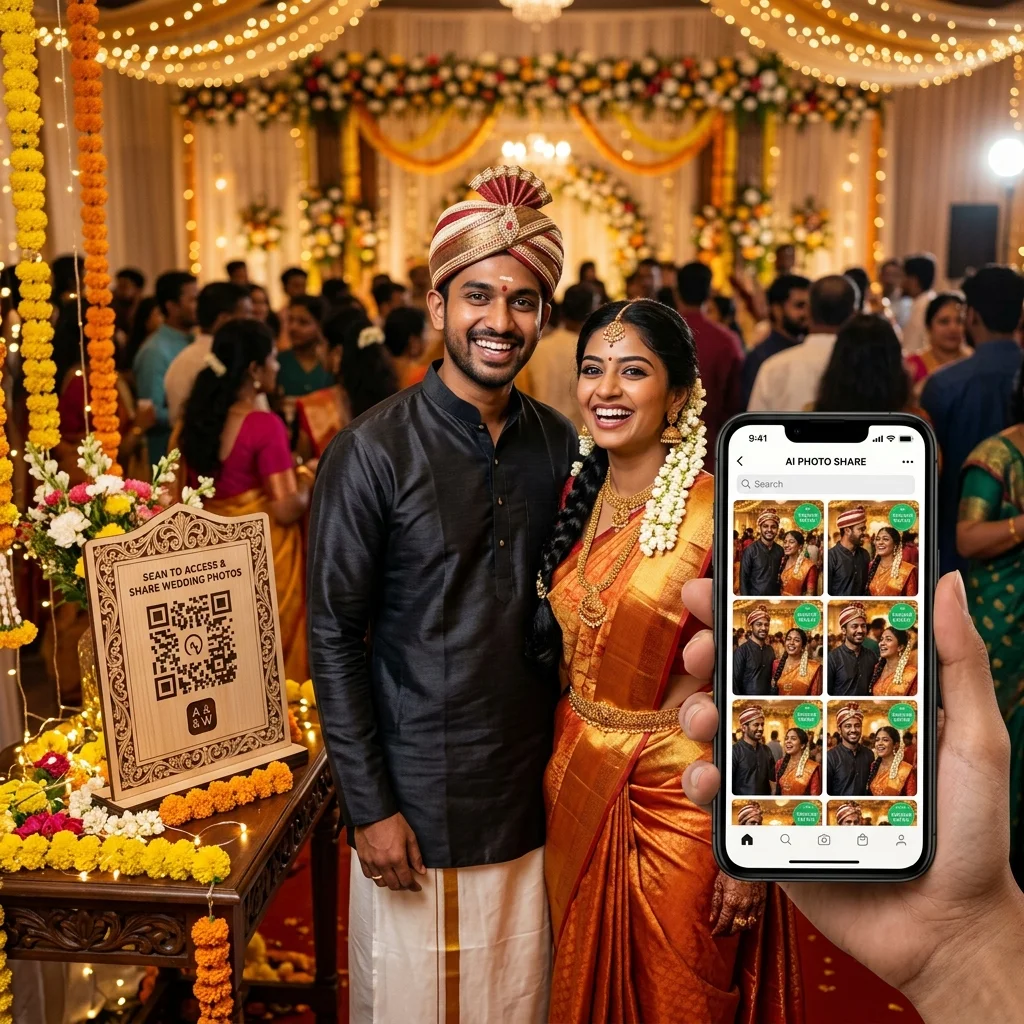
An AI photo sharing platform is software that automatically matches event photos to the guests who appear in them, using face recognition, and lets each guest retrieve their own photos through a QR code or link - without the photographer sorting a single image by hand. For Indian photographers shooting weddings, temple functions, school events, and corporate functions with hundreds of guests, this has become a distinct category of software, separate from a plain online gallery or a Google Drive folder.
This guide explains what the category actually means, how it works end to end, where it fits into a photographer's workflow, and what to check before choosing one.
Table of Contents
- What Is an AI Photo Sharing Platform?
- How Is It Different from a Normal Photo Gallery or File-Sharing Link?
- How AI Face Recognition Helps Guests Find Their Own Photos
- How QR Codes Fit Into Event Photo Delivery
- A Typical Photographer Workflow, Start to Finish
- Where AI Photo Sharing Works Best
- What to Evaluate Before Choosing an AI Photo Sharing Platform
- Privacy and Data Handling - What Photographers Should Ask
- Where MyPhotoStudio Fits
- Frequently Asked Questions
What Is an AI Photo Sharing Platform?
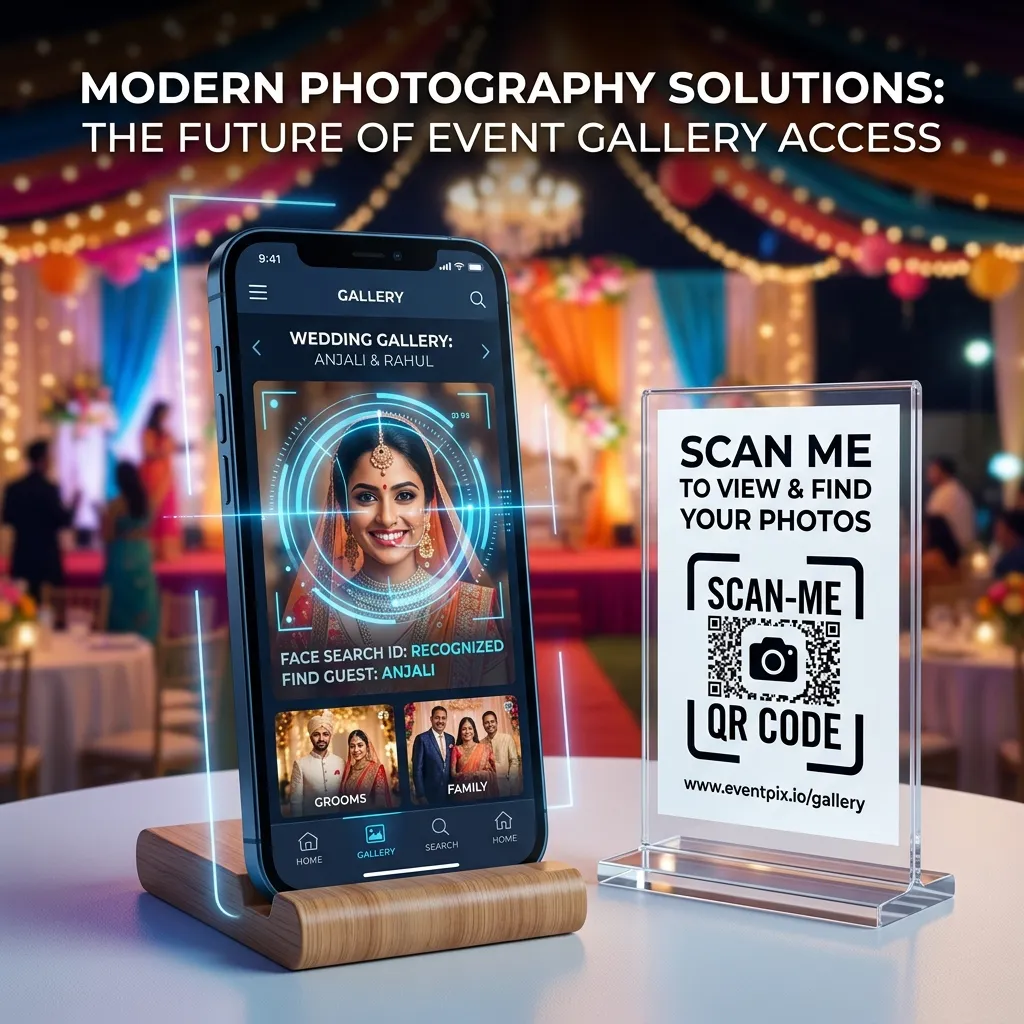
An AI photo sharing platform is a category of software built specifically for delivering event photos at scale. Instead of the photographer manually sorting, tagging, or messaging individual photos to guests, the platform uses face recognition to index every face in the uploaded gallery. Guests then find their own photos by scanning a QR code and taking a selfie.
The core idea is simple: the photographer uploads once, and each guest sorts themselves. This is why the category exists separately from general-purpose file storage or a basic online gallery - it is built around one specific job, matching people to photos automatically, at event scale.
How Is It Different from a Normal Photo Gallery or File-Sharing Link?
A regular online gallery or a shared Google Drive folder does one thing well: it stores photos in one place. It does not know who is in which photo. A guest opening a 2,000-photo folder still has to scroll through everything to find themselves, in whatever order the files happen to be sorted.
An AI photo sharing platform adds a matching layer on top of storage. The gallery still holds every photo, but each guest sees a personalised view - only the photos they actually appear in. The difference is not where the photos live, it is how guests reach the ones that matter to them.
This distinction matters most at scale. For 20 guests, a shared folder is manageable. For 400 wedding guests or 600 parents at a school annual day, manual browsing breaks down completely, and that is exactly the gap this category of software is built to close.
The same gap shows up whenever a photographer tries to fulfil individual photo requests manually after an event - searching through thousands of images for "the one with my family" is not something a shared folder was ever designed to do, no matter how well it's organised into subfolders.
How AI Face Recognition Helps Guests Find Their Own Photos
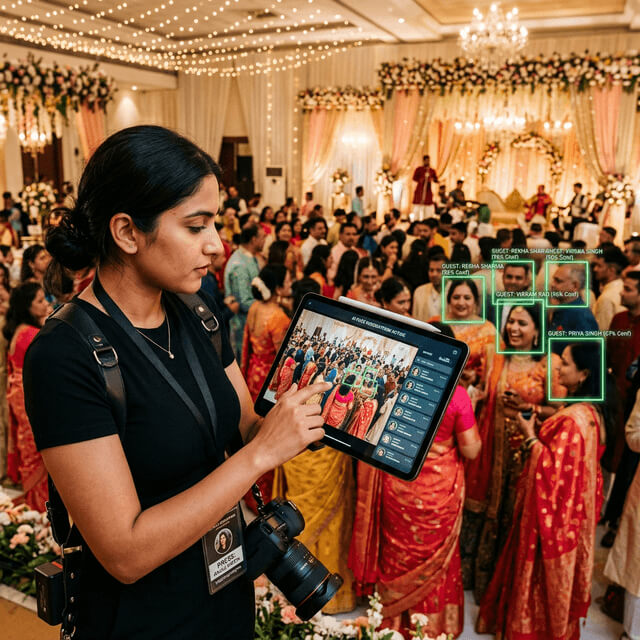
AI face recognition photo sharing works by converting each face in every uploaded photo into a mathematical representation, then comparing that against a guest's selfie when they search. The photographer never manually tags anyone - the matching happens automatically once photos are uploaded.
From a guest's side, the process is deliberately simple: open the gallery link, take a selfie in the browser, and see only the photos that match. There is no folder to browse and no photo ID to remember. This is the same technology category referenced by terms like AI face recognition photo delivery, and it is the engine behind the "platform" layer of an AI photo sharing platform - QR codes handle access, face recognition handles personalisation.
How QR Codes Fit Into Event Photo Delivery
QR codes solve a different problem than face recognition: getting guests to the right gallery in the first place. At an event, a printed QR code standee or a shared link is far more practical than asking hundreds of guests to remember a website address or install an app.
A guest scans the code, the gallery opens directly in their phone's browser, and from there face search takes over to personalise what they see. QR code photo sharing and AI face recognition are complementary parts of the same delivery workflow, not competing features - one is the door, the other is the personalised experience once a guest is inside.
A Typical Photographer Workflow, Start to Finish
Upload
After editing, the photographer uploads the full set of event photos to the platform in one batch. This is the only manual step in the entire delivery process - everything after this point runs automatically.
Share QR
The platform generates a QR code and gallery link for the event. This can be printed as a standee at the venue, displayed on a screen, or shared directly with the couple, school, or event organiser to forward to guests.
Guest Selfie Search
Each guest scans the QR code independently, at their own convenience - during the event, that evening, or days later. They take a selfie in the browser, and the platform returns their personalised set of photos.
Delivery
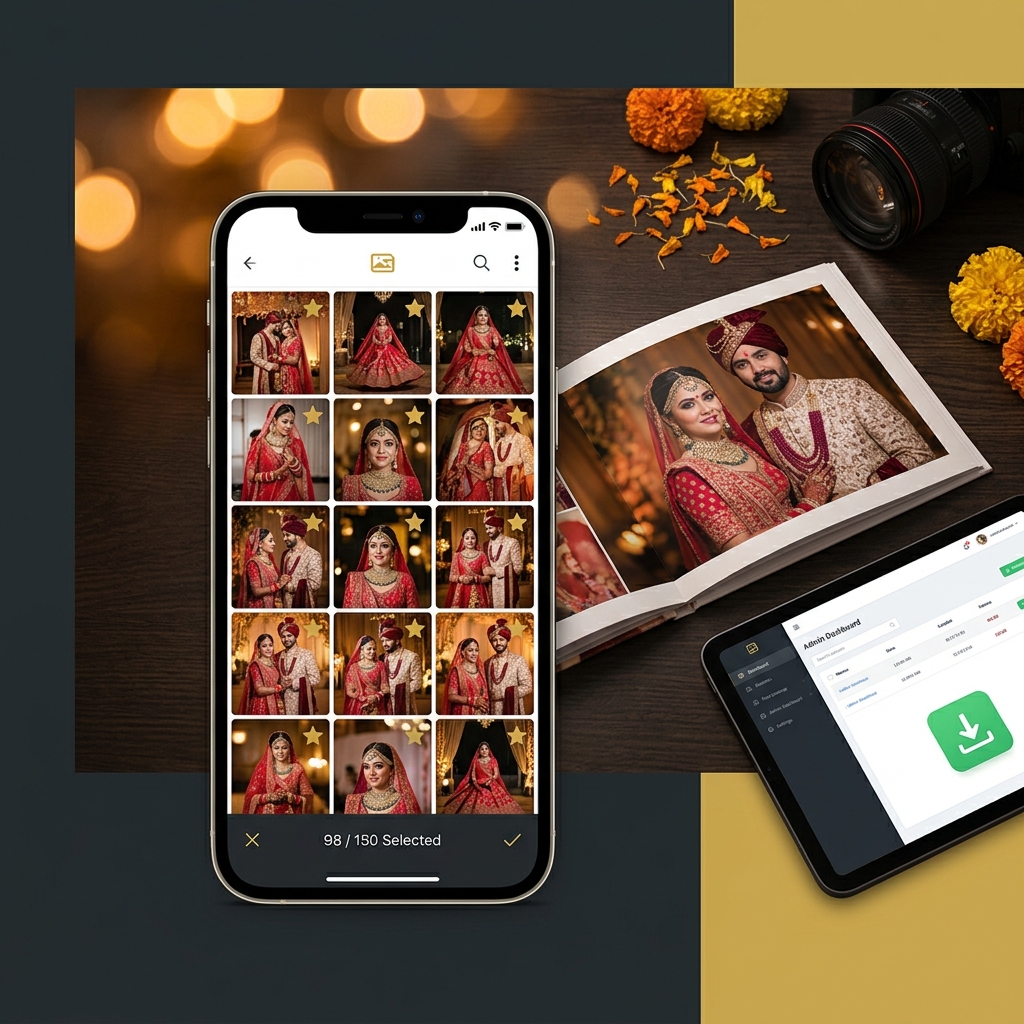
Guests view, and where enabled, download or order prints of their own photos directly from the gallery. The photographer is not involved in this step for any individual guest - there is no back-and-forth over WhatsApp or email to track.
Where AI Photo Sharing Works Best
AI photo sharing platforms are built for events with enough guests that manual sorting is impractical. A few common examples:
Weddings
Indian weddings often run into hundreds of guests across multiple functions and days. Face search lets each guest - not just the couple - retrieve their own photos from the full event without asking the photographer directly.
Temple Events
Temple functions and religious gatherings can involve large, loosely organised crowds where formal guest lists don't exist. A QR code at the venue gives anyone who attended a way to find their own photos afterward.
Corporate Events
Conferences, product launches, and company celebrations typically need fast turnaround and a professional guest experience. Personalised galleries replace a single shared album that employees would otherwise have to scroll through.
School and College Events
Annual days, sports days, and graduation ceremonies often involve hundreds of children and even more parents, each looking for a handful of specific photos. This is one of the clearest cases for face-search delivery over pen drives or WhatsApp groups - a pattern covered in more depth in our school annual day photo delivery guide.
Sports Events
Marathons and sports days involve large numbers of participants who are often photographed only briefly, in motion, and are hard to identify manually across thousands of action shots.
What to Evaluate Before Choosing an AI Photo Sharing Platform
Not every platform in this category is built the same way. A few practical questions are worth asking before committing to one for a live event:
| What to Check | Why It Matters |
|---|---|
| Face-search accuracy at scale | Performance can vary as gallery size and guest count grow - ask how the platform handles a large, busy event, not just a small demo gallery. |
| Guest access method | Whether guests need to install an app, or can access the gallery directly through a browser, affects how many guests actually complete the process. |
| Privacy and data handling | Ask directly how selfie and face data is stored, and for how long, before an event goes live. |
| Event scale support | Confirm the platform is built for the guest count you actually expect, from a small family function to a large public event. |
| Pricing transparency | Understand exactly what is included per event before committing, rather than discovering limits mid-delivery. |
Privacy and Data Handling - What Photographers Should Ask
Because AI photo sharing platforms process guest selfies to perform face matching, privacy is a legitimate question to raise with any platform before an event - not an afterthought. At minimum, it's worth asking whether guests only see photos they actually appear in rather than the full event gallery, and how face data is handled after the event.
This article does not make specific legal or compliance claims on behalf of any platform, since data-handling practices vary by provider. Photographers should confirm these details directly with whichever platform they use before an event, rather than assuming a default.
It is reasonable to ask a platform directly whether guest selfies are used for anything beyond matching photos for that specific event, and whether that data is deleted or retained afterward. A platform that can answer this clearly, in writing, is easier to trust with a client's guest list than one that cannot.
Where MyPhotoStudio Fits
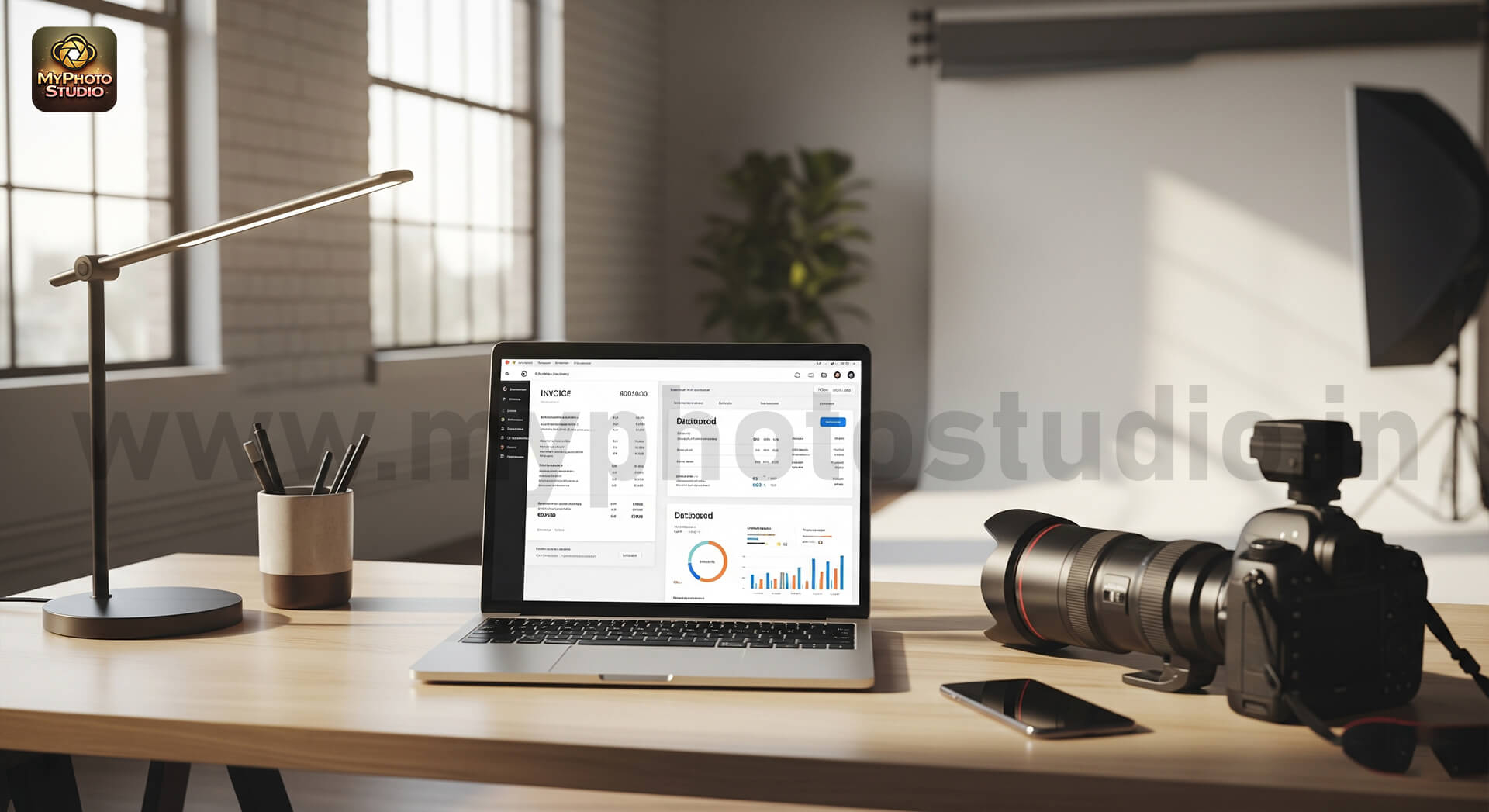
MyPhotoStudio is built around this category for Indian event photographers - AI face recognition for guest photo matching, QR code access that works entirely in a browser without requiring guests to install an app, and support for event types ranging from weddings to school functions to sports events. Photographers who need to track bookings, payments, or client details alongside photo delivery can use the platform's studio-management features as a supporting layer, but the core of the platform is the AI + QR photo delivery workflow described above.
Frequently Asked Questions
What is an AI photo sharing platform?
An AI photo sharing platform is software that uses face recognition to automatically match event photos to the guests who appear in them, and lets guests retrieve their own photos through a QR code or link, without the photographer manually sorting images.
How does AI photo sharing work for photographers?
The photographer uploads all edited event photos once. The platform indexes every face automatically. Guests then scan a QR code, take a selfie, and receive only the photos they appear in - the photographer is not involved in matching individual guests to photos.
How do guests find their own photos?
Guests scan a QR code to open the event gallery in their phone's browser, then take a selfie. The platform compares the selfie against the indexed gallery and returns a personalised set of matching photos.
What is AI face recognition photo delivery?
It is the underlying technology that matches faces in uploaded photos to a guest's selfie, so each guest can retrieve only their own photos instead of browsing the entire event gallery.
How does QR code photo sharing work at an event?
A QR code, usually printed as a standee at the venue or shared as a link, opens the event's gallery directly in a guest's browser. From there, face search personalises what each guest sees.
Is an app required for guests to view or download photos?
On MyPhotoStudio, no - the gallery, selfie search, and photo access all run inside a standard mobile browser, without requiring guests to download an app.
Is guest face/selfie data stored permanently?
No. Guest face data is not retained permanently after the event's retention period ends. Photographers should confirm the specific retention details with their platform before an event.
Explore how MyPhotoStudio's AI photo sharing platform works or view pricing plans to see what's included per event.
Transform Your Photography Studio Today
Start automatically delivering thousands of event photos directly to your clients using MyPhotoStudio's AI Face Recognition - from ₹1,000 per event.
Start Free TrialExplore our AI photo sharing platform, learn about our photography CRM software, or view pricing plans.